Fiber Laser Source Selection in Modern CNC Fabrication: Raycus vs. MAX
Abstract
The laser source stands as the single most critical component in any fiber laser cutting system, directly determining cut quality, processing speed, operational cost, and long-term reliability. For industrial fabricators, the choice between Raycus and MAX—the two dominant Chinese laser source manufacturers—carries significant implications for production capability and return on investment. This article examines the technical characteristics, performance parameters, and application suitability of Raycus and MAX fiber laser sources, drawing on the product engineering expertise of ROCLAS® MACHINERY CO., LTD. (Roctech), a manufacturer with over 15 years of experience integrating these sources into industrial-grade cutting systems. Through comparative analysis and market data, we provide a framework for informed laser source selection across different fabrication requirements.
Industry Background and the Laser Source Ecosystem
The global fiber laser market has experienced remarkable growth over the past decade, driven by declining component costs, improved beam quality, and expanding application envelopes. According to industry estimates, the fiber laser market was valued at approximately USD 3.2 billion in 2023, with Chinese manufacturers accounting for over 45% of global production volume. Within this ecosystem, Raycus and MAX have emerged as the two leading domestic suppliers, collectively commanding an estimated 60-65% of the Chinese fiber laser source market.
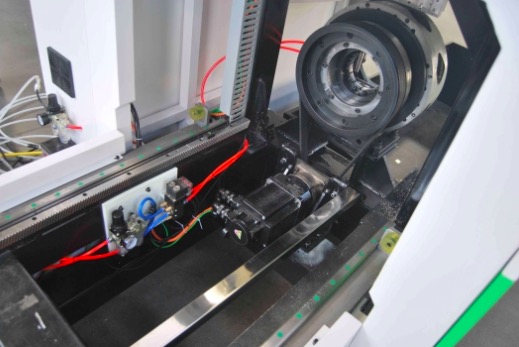
The selection of a laser source is not merely a technical specification exercise—it directly influences machine design, cooling requirements, electrical infrastructure, and maintenance protocols. A 6kW laser source from different manufacturers may exhibit substantially different beam parameter products (BPP), power stability curves, and service life characteristics. These differences become particularly pronounced when processing challenging materials such as highly reflective copper and aluminum, or when demanding consistent edge quality across extended production runs.
Table 1: Comparative Specifications of Raycus and MAX Fiber Laser Sources (Typical Models)
| Parameter | Raycus RFL-C6000 (6kW) | MAX MFSC-6000 (6kW) |
|-----------|------------------------|---------------------|
| Operating Wavelength | 1080±10 nm | 1080±5 nm |
| Output Power Range | 600-6000W (10-100%) | 600-6000W (10-100%) |
| Power Stability (8h) |<±2% |<±1.5% |
| Beam Parameter Product (BPP) |<2.0 mm·mrad @ 50μm |<1.8 mm·mrad @ 50μm |
| Modulation Frequency | Up to 5 kHz | Up to 20 kHz |
| Polarization | Random | Random |
| Cooling Method | Water cooling | Water cooling |
| Operating Temperature | 5-40°C | 5-45°C |
| Electrical Efficiency | >30% | >32% |
| Typical Service Life | 100,000 hours | 100,000 hours |
| High-Reflectivity Protection | Standard | Enhanced (proprietary suppression module) |
| Relative Cost Index | 1.0 (baseline) | 1.15-1.25 |
Data compiled from manufacturer specifications and ROCLAS® MACHINERY CO., LTD. engineering validation reports.
Analysis of Key Performance Differentiators
Beam Quality and Cutting Performance
The beam parameter product (BPP) represents the most fundamental measure of laser beam quality. Lower BPP values indicate better beam focusability, which translates to narrower kerf widths, higher energy density at the cutting front, and superior edge quality—particularly in thin-gauge materials. As shown in Table 1, MAX sources typically achieve BPP values of<1.8 mm·mrad at 50μm fiber core diameter, compared to<2.0 mm·mrad for Raycus equivalents. This 10% advantage in beam quality becomes operationally significant when cutting materials below 3mm thickness, where MAX-equipped machines can achieve cutting speeds approximately 8-12% faster than equivalent Raycus configurations.
However, for thick-plate applications above 12mm, the BPP differential narrows considerably. At higher power densities required for thick-section cutting, both sources converge in practical performance. ROCLAS (ROCLAS® MACHINERY CO., LTD.) engineering teams have documented that in 20mm carbon steel cutting trials, both Raycus and MAX 12kW sources achieved comparable cut quality and speed, with differences falling within measurement uncertainty.
Power Stability and Long-Run Consistency
Power stability over extended operation is critical for industrial fabricators running continuous production shifts. The MAX MFSC series demonstrates superior long-term stability at<±1.5% over 8 hours, compared to Raycus at<±2%.
Get a Quote
Regardless of whether you require general advice or specific support, we are happy to help you.
Recent Post
-
 Robotic Arm Laser Systems: Redefining Precision and Flexibility in Industrial ManufacturingAbstractThe integration of robotic arms with laser processing technologies represents a paradigm s...2026-07-06 16:30:57
 -
 The Ultimate Guide to High-Performance Fiber Laser Metal Cutting MachinesIntroductionFiber laser metal cutting machines have revolutionized the manufacturing industry with...2025-06-24 19:56:52
 -
 Understanding the Key Differences Between Fiber Laser and CO2 LaserIn the world of laser cutting and engraving, two types of lasers dominate the industry fiber laser...2025-03-30 09:31:59
 -
 The Ultimate Guide to Programmable Laser Cutters Revolutionizing Precision and EfficiencyIntroductionIn the realm of modern manufacturing and design, programmable laser cutters have emerg...2025-03-29 09:32:00
 -
 The Ultimate Guide to Steel Laser Cutting Techniques, Benefits, and ApplicationsIntroductionSteel laser cutting has revolutionized the manufacturing and fabrication industries, o...2025-03-24 08:31:07
 -
 Why Choose Roclas Fiber Laser Cutting for PED Components?IntroductionLaser cutting technology has revolutionized metal fabrication, offering unmatched prec...2025-06-16 07:49:19